In the world of American sports, moments of joy and heartbreak often intertwine, but rarely has a single clip sparked such universal outrage as the now-viral “Phillies Karen” incident. The footage, which shows a grown woman aggressively seizing a baseball intended for a young boy celebrating his birthday at a Philadelphia Phillies game, has ignited fierce debate across the sports landscape. While fans, commentators, and celebrities have all weighed in with disgust, one voice carried the thunder of both indignation and compassion: San Francisco 49ers star tight end George Kittle. Known as much for his larger-than-life personality as for his bone-crunching blocks and highlight-reel catches, Kittle didn’t hold back. He called the incident “an embarrassment to American sports,” publicly shamed the woman involved, and, in a remarkable act of kindness, pledged to send the heartbroken boy a signed jersey and VIP tickets to a 49ers game.
Kittle’s comments exploded across social media within minutes. “You should be ashamed of yourself for fighting with a child,” he declared, his words resonating with millions who had already expressed outrage at the video. Coming from a player celebrated for his toughness and warrior mentality on the field, the statement carried an added weight — a reminder that sportsmanship is not about domination or selfishness, but about community, joy, and the preservation of innocence. For the boy, whose teary reaction to losing the ball touched hearts nationwide, Kittle’s intervention has turned tragedy into a moment of unforgettable redemption.

To understand the magnitude of this story, one has to grasp just how sacred “the ball” is in American sports culture. For a child at their first baseball game, catching or receiving a ball tossed into the stands is a once-in-a-lifetime treasure, a tangible connection to the magic of the game. The viral clip captured not just the theft of an object, but the theft of a memory. The boy’s stunned face, as the woman clutched the ball triumphantly, symbolized the darker side of entitlement in stadiums: adults who prioritize selfish souvenirs over the simple joy of letting a child create their own memory.
Kittle’s fiery response cut through the noise precisely because he represents the opposite of that selfishness. Throughout his NFL career, he has been beloved not only for his talent but for his authenticity, his humor, and his ability to connect with fans. Whether signing autographs for hours after practice or tossing the ball back into the stands after a touchdown, Kittle has always understood that the power of sports lies not just in the scoreboard but in the human connections it creates. By stepping into this controversy, he didn’t just condemn bad behavior — he modeled the generosity and decency that fans want to see in their heroes.
“This is bigger than baseball, bigger than football,” Kittle said in his follow-up remarks. “It’s about how we treat kids who look up to us, who dream about being a part of this. When I saw that clip, I couldn’t believe it. It broke my heart. And then I thought, okay, what can I do? I can’t change what happened at that game, but I can make sure that kid knows he’s seen, he’s valued, and that there are athletes out there who care.” With that, Kittle announced he would send the boy a personalized 49ers jersey with his autograph and invite him to Levi’s Stadium for a VIP game-day experience. “We’re going to make sure he gets his moment. And I promise you, nobody’s taking that away from him this time.”
The gesture immediately lit up fan communities across platforms. Niners Faithful praised Kittle for his leadership both on and off the field, while neutral fans applauded him for taking a stand. “George Kittle just showed what true sportsmanship looks like,” one fan wrote on X (formerly Twitter). “He’s giving that kid the memory he deserves.” Even fans of rival teams chimed in with respect, acknowledging that in moments like these, sports rivalries fade and shared humanity shines.
But Kittle’s outrage also reignited conversations about fan behavior in stadiums. The incident has drawn attention to an uncomfortable truth: the rise of viral moments and souvenir hunting has sometimes eroded the spirit of family-friendly fun. While most fans understand the unwritten rule that balls tossed to kids belong to kids, too often adults let competitiveness, entitlement, or social media clout override decency. Kittle’s “embarrassment to American sports” comment wasn’t just aimed at one individual, but at a broader cultural problem that threatens the image of the games themselves.
The story also struck a chord because it blurred the boundaries between sports. Here was a football superstar weighing in on a baseball controversy, proving that at their core, the values of sports transcend individual leagues. Kittle’s defense of the boy symbolized how athletes can use their platforms to uphold standards of decency across the sporting world. His intervention reminded fans that whether you’re watching the NFL, MLB, NBA, or NHL, the core principles should be the same: respect, joy, and inclusion.
For the young boy, whose name has not been publicly disclosed at his family’s request, the tide has turned dramatically. In the span of a week, he went from heartbroken birthday boy to the focus of national empathy and generosity. Messages of support have poured in from fans across the country. Now, with Kittle’s VIP invitation, he will soon walk through the tunnel at Levi’s Stadium, meet one of the NFL’s biggest stars, and carry home not just a signed jersey, but a memory forged in kindness rather than cruelty.
Kittle’s actions also reflect a growing movement among athletes to step beyond their own sport and speak out on cultural moments. In recent years, stars like LeBron James, Patrick Mahomes, and Serena Williams have used their platforms to challenge injustices and model compassion. By entering the “Phillies Karen” controversy, Kittle aligned himself with this generation of athletes who understand that their responsibility doesn’t end when the whistle blows. “We’ve got influence,” Kittle said. “We can use it for good or we can waste it. I’m going to use mine for good.”
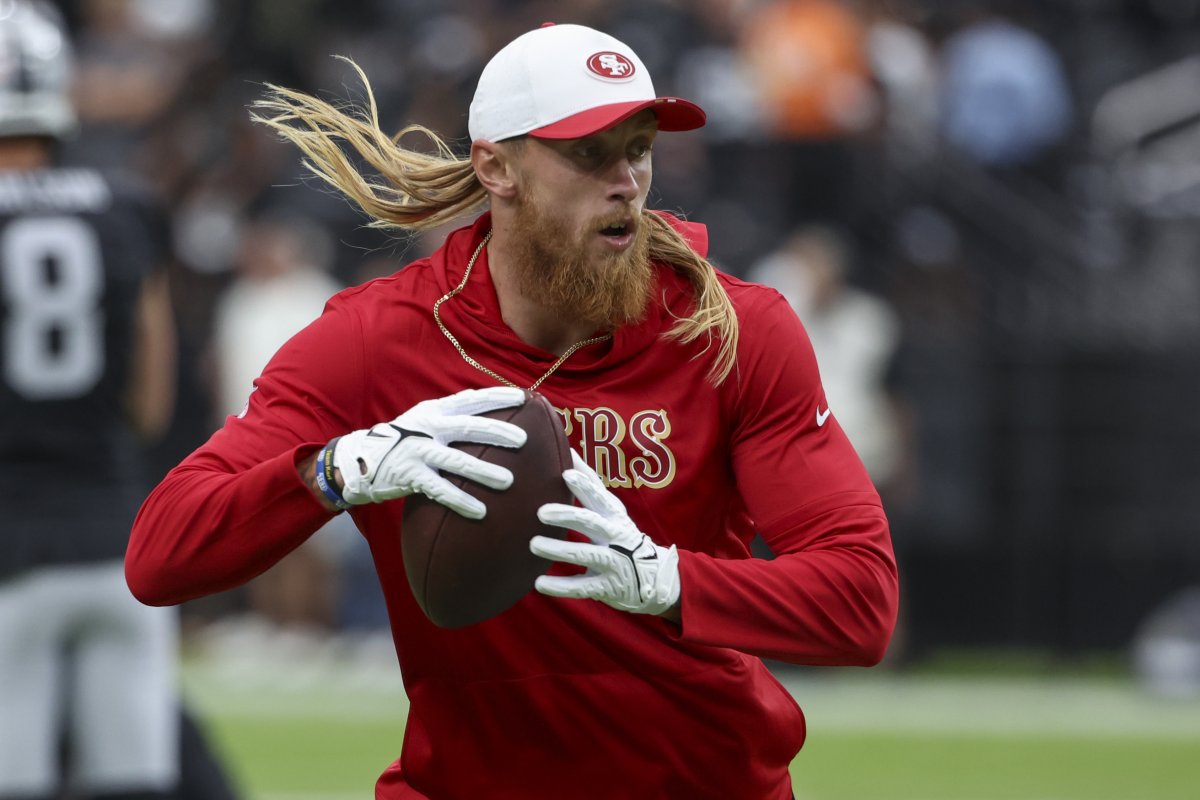
The broader implications of the incident will likely ripple for weeks. MLB has already faced calls to strengthen policies about ball distribution and fan conduct, while parenting groups and fan associations have weighed in with frustration. But in the midst of that debate, Kittle’s clear, heartfelt words stand out. He didn’t couch his statement in diplomacy. He didn’t worry about stepping on toes. He called it what millions saw it as: an embarrassment. And then, crucially, he took action to right the wrong.
As the NFL season heats up and the 49ers chase another run at the Super Bowl, George Kittle’s name will be in headlines for his performances, his touchdowns, and his leadership on the field. But this story ensures that his impact will extend far beyond the gridiron. In a moment when a child’s innocence was trampled by selfishness, he stepped in as both protector and provider, turning viral outrage into tangible hope.
In the end, the legacy of this incident may not be the shame of “Phillies Karen,” but the grace of George Kittle. He reminded fans that true greatness isn’t just about winning games. It’s about standing up when something is wrong, offering kindness when someone is hurting, and showing that the spirit of sports can still be a beacon of humanity. And for one boy whose birthday memory was stolen, that lesson will last a lifetime.


