The NFL thrives on rivalries, and few feel as raw, as gritty, or as emotionally charged as the battles between the Detroit Lions and the Green Bay Packers. On Sunday night, the two NFC North foes collided in a showdown that carried more than just divisional implications. By the time the scoreboard at Lambeau Field read 27–13 in favor of the Packers, most assumed the storyline would revolve around Green Bay’s steady dominance and Jordan Love’s poise under pressure. But then Dan Campbell, Detroit’s fiery head coach, refused to let the narrative rest quietly. In a press conference that has already gone viral, Campbell declared the Packers to be the “most dangerous team of the season,” a statement that not only reignited tensions between the franchises but also prompted an immediate and sharp rebuttal from Green Bay’s head coach Matt LaFleur. What should have been a routine postgame reflection has instead evolved into one of the most contentious debates of the NFL season so far.
Campbell, known for his unapologetic grit and often colorful press conference quotes, appeared visibly agitated as he spoke to reporters. His message was not one of surrender, but of warning. “They’re not just good,” he said of the Packers. “They’re the most dangerous team in the league right now. I’m not conceding anything—we’ll see them again, and when we do, it’s going to be a fight.” The words, delivered in his signature blunt and passionate tone, cut through the typical coach-speak that fans are used to hearing after a tough loss. They carried an edge of defiance, almost as if Campbell were daring his team, his fanbase, and even his opponents to take his warning seriously.

The remark immediately raised eyebrows across the league. Why would a coach publicly elevate a rival after being beaten soundly? Was Campbell conceding psychological ground by labeling the Packers so highly, or was he strategically framing the loss to motivate his team for the rematch? Either way, the phrase “most dangerous team” began to trend within minutes, plastered across sports networks, social media platforms, and fan debates. For the Lions, a franchise that has fought tirelessly to shed its decades-long label as underachievers, Campbell’s words reflected both a recognition of reality and a refusal to be silenced.
Green Bay, however, did not let the comment pass without response. Matt LaFleur, a coach whose composure and methodical style often stand in contrast to Campbell’s fiery energy, was asked about Campbell’s claim during his own press availability. With a smirk that betrayed both amusement and competitiveness, LaFleur shot back: “Dangerous is a matter of perspective. I think every team should worry about themselves first.” To many, it sounded like a subtle jab at Campbell, a reminder that in the NFL, excuses and compliments hold less weight than wins and losses. LaFleur’s response only added fuel to the fire, setting the stage for their next encounter as not just another game, but a grudge match dripping with pride and tension.
The fans, naturally, have run with the storyline. Detroit’s faithful see Campbell’s statement as a rallying cry, proof that their coach refuses to back down even in defeat. Social media boards have filled with posts defending Campbell’s passion, with some fans arguing that he is setting the stage for a redemption arc that could define the Lions’ season. Packers fans, meanwhile, have reveled in the comment as validation, interpreting Campbell’s words as an admission of their dominance. The back-and-forth between the two fanbases has grown increasingly personal, reflecting the deep-seated animosity that has always defined the Lions-Packers rivalry.
From a broader league perspective, the incident has sparked fascinating conversations about coaching psychology. Campbell has built his reputation on authenticity—he says what he feels, often with little filter, and his players have embraced his raw honesty as a sign of loyalty and leadership. But there’s also risk in such candor. By publicly elevating the Packers, Campbell may have inadvertently painted his own team into a corner, raising expectations for a fiery comeback that must now be delivered to preserve credibility. Conversely, some analysts argue that his statement may have been carefully calculated, designed to deflect attention from Detroit’s mistakes while simultaneously planting a seed of motivation in his locker room. If the Lions bounce back stronger in the coming weeks, Campbell’s fiery declaration will be hailed as genius. If not, critics will point to it as another example of passion overrunning strategy.
On the field, the 27–13 loss exposed real issues for Detroit. Offensive inconsistency, defensive breakdowns, and missed opportunities were glaring, and the Packers capitalized ruthlessly. Jordan Love’s precision passing combined with a balanced ground attack made life difficult for Detroit’s defensive front, while Green Bay’s secondary neutralized many of the Lions’ offensive threats. Campbell’s words, then, are not just posturing—they may also reflect his recognition of just how formidable the Packers looked in that matchup. Calling them “dangerous” may not be hyperbole but a sober acknowledgment of the challenge his team faces if it hopes to compete for the division crown.
The timing of Campbell’s declaration also matters. The NFC North has become one of the most intriguing divisions in football, with each team carrying storylines that demand attention. The Bears are rebuilding but restless, the Vikings are fighting to reclaim dominance, and the Packers are forging a new identity in the post-Aaron Rodgers era. Campbell’s refusal to concede keeps the Lions firmly in the conversation, reminding both his players and the league that Detroit is not content to fade into the background. In many ways, the comment was less about Green Bay and more about Detroit—an insistence that no matter the result of one game, the Lions will not bow out of the fight.
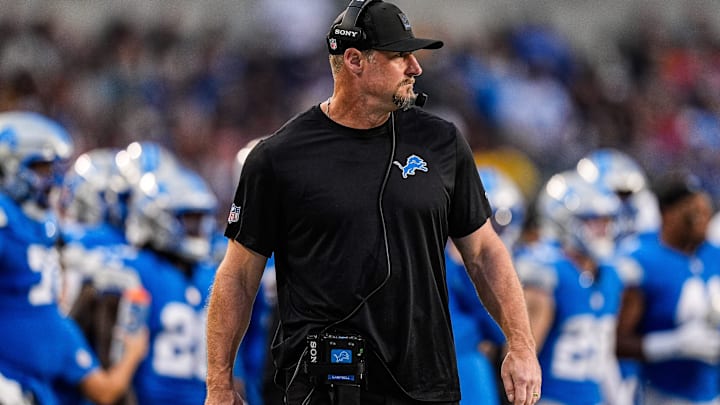
The financial and reputational stakes are also significant. Detroit’s resurgence under Campbell has reinvigorated the fanbase, driving ticket sales, merchandise, and national attention. Yet with increased visibility comes increased pressure. Every word, every decision, and every result is magnified. For a coach who thrives on emotional authenticity, the margin for error is razor thin. This latest incident illustrates that dual-edged reality: Campbell’s words can inspire or they can haunt, depending on how his team responds on the field.
Looking ahead, the anticipation for the next Lions-Packers clash has already reached fever pitch. Analysts are circling the rematch as a must-watch, not just for the playoff implications but for the raw emotion that will hang over the contest. The tension between Campbell and LaFleur, the pride of two historic franchises, and the weight of fan expectations all but guarantee that the matchup will carry the energy of a playoff game, even if it comes in the middle of the regular season. If the Lions deliver, Campbell’s words will be etched into Detroit lore as the spark that lit their comeback. If they falter again, the phrase “most dangerous team” may linger as a haunting reminder of a season that never reached its potential.
For now, though, one thing is clear: Dan Campbell has once again proven that he is incapable of delivering anything less than pure theater. In a league built on narratives as much as on wins, his refusal to quietly accept defeat has transformed an ordinary divisional loss into a national talking point. The Lions’ journey this season will ultimately be defined by results on the field, but Campbell’s voice—passionate, defiant, and unfiltered—ensures that Detroit will never be ignored. Love him or hate him, dismiss him or admire him, Campbell has made one thing undeniable: in the NFL, sometimes words can hit as hard as any block, tackle, or touchdown.


