The Minnesota Vikings recently made headlines with the announcement of their newest additions to the cheerleading squad: Blaize Shiek and Louie Conn, two male cheerleaders set to join the ranks of the NFL team’s traditionally female-dominated ensemble. Shiek, in particular, has captured attention not only for his athleticism and charisma but also for his heartfelt response to the mixed reactions his selection has generated.
In a statement shared on social media, Shiek expressed profound gratitude for the opportunity to represent the Vikings, saying, “I am so grateful for this journey, the support, and the opportunity to make a little history along the way. I hope to represent and inspire what’s possible when you stay true to who you are.” His message reflects both pride in his achievement and an awareness of the broader cultural significance of his presence on the squad. For Shiek and Conn, joining the Vikings’ cheerleading team is more than a professional milestone—it is a step forward in challenging gender norms and expanding visibility for men in roles historically reserved for women.
Despite the excitement surrounding this announcement, the news has not been universally well-received. Social media quickly erupted with backlash, including homophobic comments and expressions of outrage from individuals resistant to seeing men in roles traditionally associated with women. Some critics questioned the legitimacy of male cheerleaders in the NFL, claiming it undermines the “traditional” image of cheerleading. Others expressed discomfort with the breaking of long-standing gender stereotypes.
:max_bytes(150000):strip_icc():focal(749x0:751x2)/Louie-Conn-Blaize-Shiek-vikings-cheerleaders-081825-8564095e9d0746ce94072984316f063b.jpg)
However, the Minnesota Vikings organization has been unwavering in its support of their new cheerleaders. Team representatives highlighted that male cheerleaders are not unprecedented in the NFL or collegiate athletics. Indeed, male cheerleaders have been part of professional and college squads for years, contributing their athleticism, choreography skills, and showmanship to enhance performances and engage fans. By defending Shiek and Conn, the Vikings reaffirmed their commitment to inclusivity and representation, emphasizing that talent, dedication, and team spirit—rather than gender—define who belongs on the squad.
The presence of male cheerleaders in professional sports is not entirely new, but it remains relatively rare in the public eye, which partly explains the intensity of the reactions. In college football, men have performed as cheerleaders for decades, often in highly athletic roles, including stunts, lifts, and tumbling sequences. These men bring essential skills to routines that require strength and coordination, demonstrating that cheerleading demands both artistry and athleticism. Yet, despite their contributions, male cheerleaders have historically received less recognition than their female counterparts, a disparity that is slowly being addressed as leagues and teams prioritize diversity and inclusivity.
For Shiek, joining the Vikings’ squad represents a convergence of passion, opportunity, and visibility. In interviews, he has spoken about how cheerleading has shaped him—not only as an athlete but as a person—teaching discipline, teamwork, and resilience. His statement about making history resonates because it highlights the broader cultural impact of his role. Young men and boys who aspire to participate in cheerleading can see someone like Shiek as proof that traditional gender expectations should not dictate personal choices or limit opportunities. By staying true to himself, Shiek hopes to inspire others to pursue their passions regardless of societal constraints.
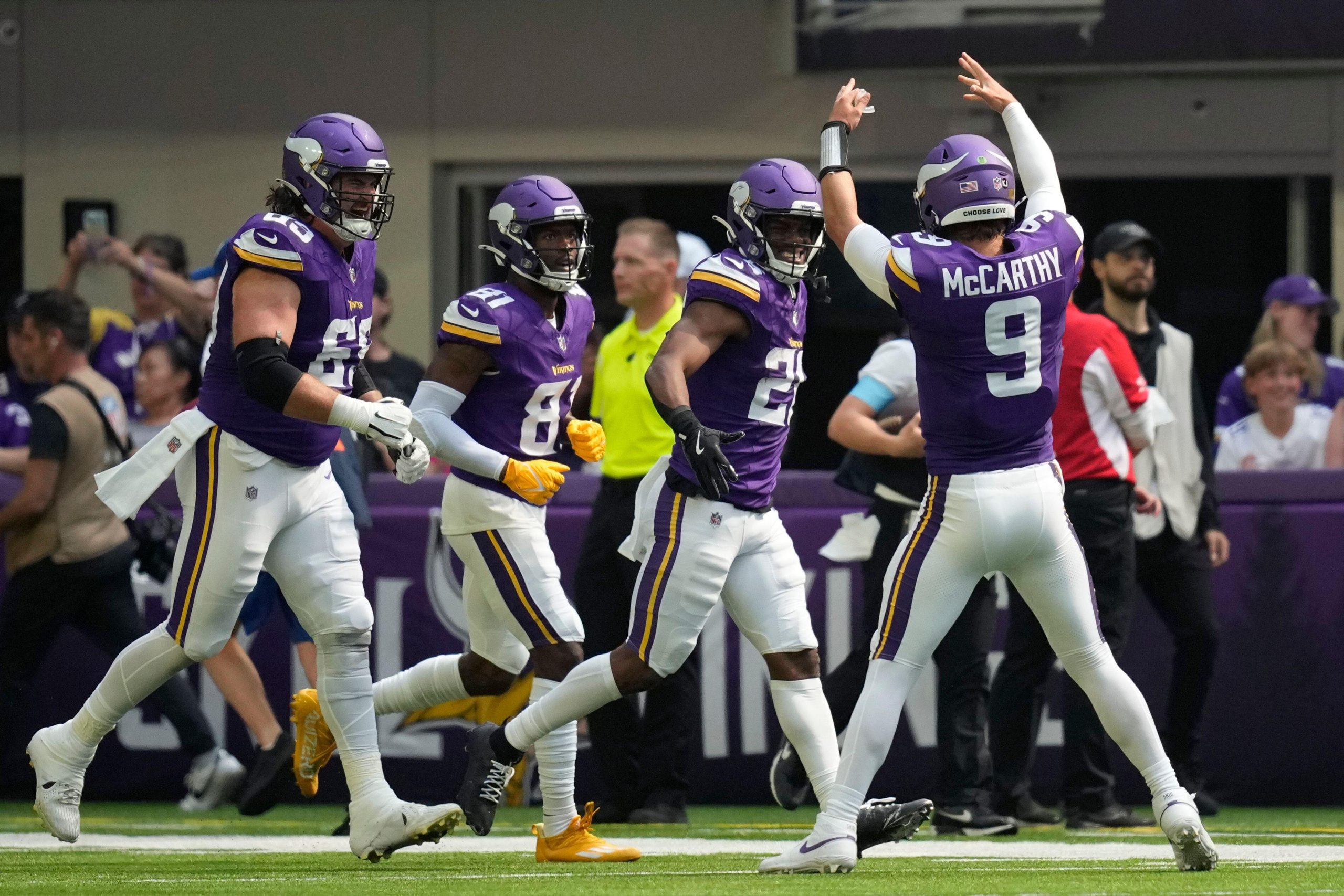
Conn, Shiek’s teammate, similarly embodies this spirit. Together, they represent a new chapter for NFL cheerleading, one where skill, commitment, and personal authenticity take precedence over gendered expectations. Their presence challenges audiences to rethink assumptions about what cheerleaders “should” look like, promoting an inclusive vision of athletic performance that values diversity and creativity.
The conversation surrounding male cheerleaders also underscores larger societal debates about gender roles and representation. Professional sports, long considered bastions of traditional masculinity, are evolving. From the inclusion of female coaches and referees to openly LGBTQ+ players and staff, the NFL and other leagues are gradually expanding their definitions of who belongs in the sport. By welcoming male cheerleaders, the Vikings are participating in this evolution, signaling that the league values talent and dedication over outdated stereotypes.
While the backlash remains a reality, the overwhelming response from fans, allies, and advocacy groups has been supportive. Many have praised the Vikings for their progressive stance and applauded Shiek and Conn for their courage and determination. Their visibility helps normalize male participation in cheerleading and fosters conversations about inclusion, representation, and breaking barriers in sports.

Ultimately, Blaize Shiek’s journey with the Minnesota Vikings exemplifies a broader shift in professional athletics. It demonstrates that authenticity and perseverance can create opportunities to challenge norms and inspire others. While he and Conn face criticism from some corners, their presence is a testament to the changing landscape of sports and entertainment, where diversity and individuality are increasingly celebrated.
As the NFL season approaches, all eyes will be on the Vikings’ cheerleading squad—not merely for the routines and performances but for the symbolism and progress represented by its members. For Blaize Shiek, this opportunity is both personal and historic, a moment that allows him to honor his passion, his identity, and the potential to inspire others to embrace who they truly are. Through dedication, talent, and authenticity, Shiek and Conn are helping to redefine what it means to cheer—not just for a team, but for a culture increasingly open to diversity, inclusion, and breaking boundaries.
BREAKING: The NFL has decided to terminate its contract with the Stonewall charity and will no longer allow team captains to wear rainbow armbands in support of the LGBTQ+ community, as well as other rainbow imagery on the field such as shoelaces, armbands, etc. The decision was made following a meeting with the captains of all 32 teams, and Adam Thielen himself has spoken out… “This is a step backward.” The decision has sparked a wave of reactions across the sports world, with wide receiver Adam Thielen being one of the first to publicly express his views on the change.
New York, USA — In a move that has sent shockwaves through the sporting world, the National Football League (NFL) has officially announced it will terminate its contract with Stonewall, the prominent LGBTQ+ charity organization. Alongside this termination, the league will no longer permit team captains to wear rainbow armbands or other rainbow-themed accessories—such as shoelaces, wristbands, or helmet decals—during games.
The decision, made public late Tuesday, followed a closed-door meeting with the captains of all 32 NFL teams. While the NFL has yet to release a detailed explanation behind the policy shift, the implications were immediate: a dramatic rollback of visible LGBTQ+ support that the league had previously embraced in campaigns like “Football is for Everyone.”
Adam Thielen Speaks Out
Among the first players to respond publicly was wide receiver Adam Thielen, currently with the Carolina Panthers. Known for his thoughtful commentary off the field as well as his consistency on it, Thielen did not mince words.
“This is a step backward,” he said in a brief but powerful statement. “The rainbow isn’t about politics—it’s about inclusion and respect. Taking that away sends the wrong message, especially to the young fans who look up to us.”

His remarks quickly gained traction across social media, where fans, former players, and advocacy groups echoed his concerns. Many praised Thielen for his courage in speaking against the league’s directive, while others questioned why such a drastic decision had been made in the first place.
The End of a Partnership
The NFL’s collaboration with Stonewall was more than symbolic. Since 2018, the league had partnered with the charity to promote inclusivity, education, and awareness for LGBTQ+ issues within sports culture. Players often wore rainbow-themed gear during Pride Month, with captains sporting rainbow armbands in select games to highlight solidarity with the community.
The partnership was widely regarded as a step toward modernizing the NFL’s image—an acknowledgment that professional football could evolve to embrace diversity and acceptance. Ending that relationship marks a sharp shift, one that many see as an attempt to retreat from progressive stances under growing political pressures.
Reactions Across the Sports World
The decision quickly ignited debate across the wider sporting community. Current and former athletes from various leagues voiced dismay at what they described as a “regression” in inclusivity. NBA and MLB players chimed in on social media, calling the move “disappointing” and “a slap in the face” to fans who had felt represented by rainbow imagery on the field.
Advocacy organizations were even more direct. Stonewall released a statement expressing “deep disappointment” and reaffirming its mission to ensure that LGBTQ+ individuals feel welcome in every sporting environment. “Symbols matter,” the statement read. “Visibility matters. This decision sends the message that LGBTQ+ people and allies are less welcome in the NFL community than before.”
Some fans outside stadiums voiced frustration as well. Online petitions quickly gathered thousands of signatures calling for the NFL to reconsider, while hashtags like #LetThemPlayProud and #StepForwardNotBack began trending on Twitter.


