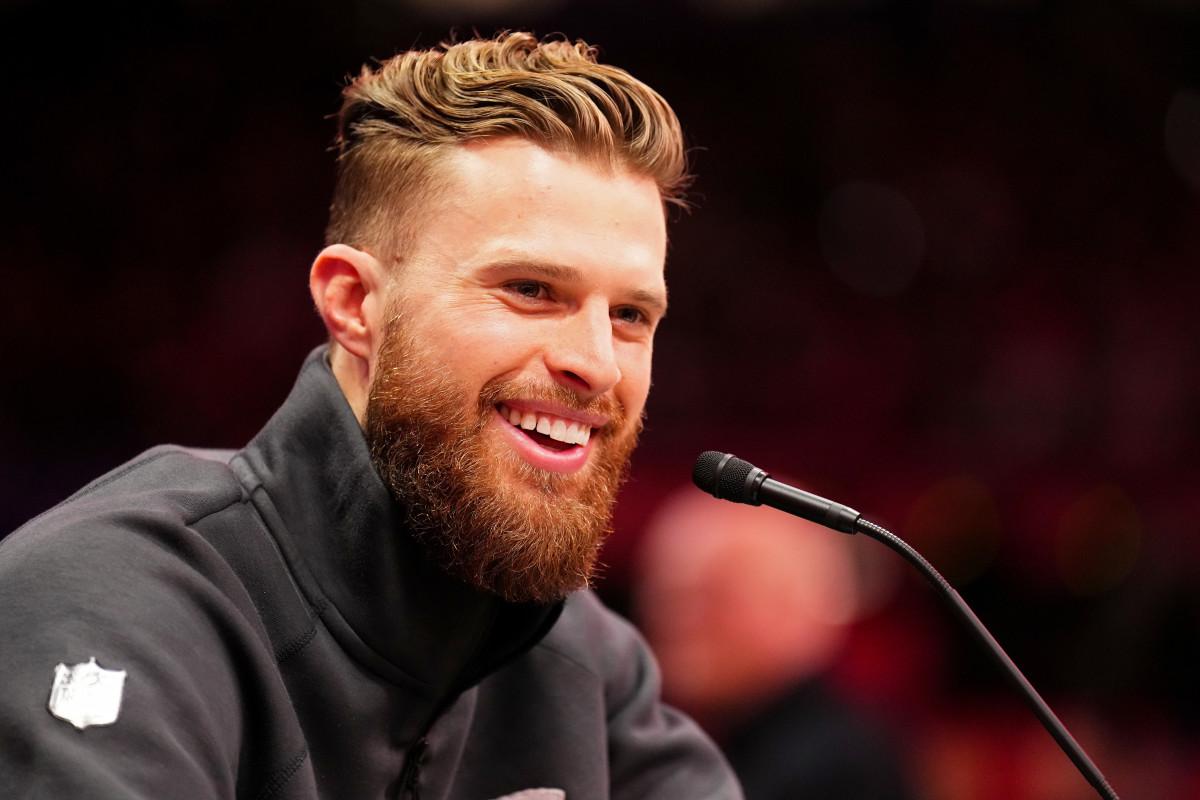
Kansas City Chiefs kicker Harrison Butker has found himself at the center of a heated public debate following a commencement speech he delivered at Benedictine College in Atchison, Kansas. In the speech, which quickly went viral, Butker referred to Pride Month as “the deadly sin sort of Pride that has an entire month dedicated to it” and criticized what he described as “dangerous gender ideologies.” His comments have drawn swift backlash from advocacy organizations and advocates for LGBTQ+ rights, sparking a wider conversation about the intersection of personal beliefs, public speech, and social responsibility.
The speech, delivered to graduates and their families, was intended as a motivational address, touching on themes of personal responsibility, faith, and character. However, it was Butker’s remarks regarding Pride Month and gender identity that dominated media coverage. By framing Pride as a “deadly sin” and labeling contemporary gender discussions as “dangerous ideologies,” Butker positioned himself in direct opposition to widely accepted conversations about LGBTQ+ inclusion and visibility.
Advocacy groups were quick to respond. GLAAD, one of the nation’s leading LGBTQ+ media advocacy organizations, condemned the remarks, calling them “inaccurate, ill-informed, and woefully out of step with Americans about Pride, LGBTQ people, and women.” Representatives highlighted that Pride Month is widely recognized as a celebration of LGBTQ+ lives, achievements, and resilience in the face of systemic discrimination. They emphasized that it is not an endorsement of “sin” or a promotion of any ideology deemed harmful; rather, it is a time to honor marginalized communities, foster acceptance, and encourage understanding.
The backlash against Butker underscores the continuing tension between personal belief systems and public discourse, particularly when delivered by high-profile figures. As a professional athlete with millions of fans, Butker occupies a unique position where his words carry influence beyond the immediate audience. Public figures, especially those with significant social reach, often face scrutiny when their personal convictions intersect with societal issues, particularly in matters of equality and human rights.
Butker’s comments also touch on broader cultural debates surrounding gender identity and sexual orientation. Over the past decade, discussions about LGBTQ+ rights, inclusion, and representation have increasingly entered public consciousness, leading to legal, social, and cultural shifts. While these conversations have been largely celebrated in progressive circles, they have also prompted criticism and concern from some religious and conservative groups who view such changes as conflicting with traditional beliefs. Butker’s speech reflects this ongoing divide, illustrating the challenges that arise when personal faith-based perspectives meet the public sphere.

Reactions to the speech have been polarized. Supporters argue that Butker exercised his right to free speech and shared his convictions in a context where he was invited to speak. They suggest that colleges, particularly those with religious affiliations like Benedictine, provide a forum for diverse perspectives, including those grounded in faith. Critics, on the other hand, argue that public figures, particularly athletes with national followings, carry a responsibility to communicate thoughtfully and avoid remarks that may perpetuate stigma or marginalize already vulnerable communities.
The incident has reignited broader discussions about how professional athletes engage in social and political discourse. In recent years, sports figures have become increasingly vocal about social justice issues, from racial equality to gender rights and LGBTQ+ advocacy. While many athletes use their platforms to champion inclusion and equity, others, like Butker, may express viewpoints shaped by personal or religious beliefs that clash with prevailing societal norms. The resulting discourse often reflects deeper societal tensions, illustrating how professional sports can serve as a microcosm for national debates about identity, morality, and civil rights.
Critics of Butker’s remarks have also pointed out that framing Pride Month as a “deadly sin” risks alienating LGBTQ+ individuals and their allies, particularly young people who may look to public figures for affirmation and support. Scholars and advocacy leaders note that language that labels sexual orientation or gender identity as morally wrong can contribute to stigma, discrimination, and mental health challenges. GLAAD’s response emphasized that such rhetoric undermines efforts to foster inclusive communities and perpetuates harmful misconceptions about LGBTQ+ lives.
The controversy has raised questions about how institutions and audiences should respond when invited speakers express contentious viewpoints. Benedictine College has not issued a formal statement regarding Butker’s speech, though observers note that private religious institutions often balance the values of free expression with their mission to uphold faith-based principles. For public discourse, the incident reinforces the importance of dialogue that respects differing perspectives while ensuring marginalized voices are not silenced or disparaged.
Ultimately, the debate surrounding Harrison Butker’s remarks highlights the complex intersection of personal belief, public influence, and social responsibility. While Butker views his comments as an expression of faith and personal conviction, advocacy groups and critics argue that the framing of Pride Month and gender discussions as morally “dangerous” misrepresents the realities of LGBTQ+ communities and undermines progress toward equality. The viral nature of the speech demonstrates the heightened scrutiny that comes with public platforms, particularly in an era when social media amplifies both support and criticism.
As the discussion unfolds, it is clear that the incident serves as more than a momentary controversy—it reflects ongoing cultural tensions about faith, identity, and public dialogue in contemporary America. Whether in sports, education, or broader society, the challenge remains to navigate these tensions with care, empathy, and awareness of the real-world impact words can have on individuals and communities. Harrison Butker’s speech, viral and controversial, is a case study in the complexities of public expression in a diverse and evolving society.
BREAKING: The NFL has decided to terminate its contract with the Stonewall charity and will no longer allow team captains to wear rainbow armbands in support of the LGBTQ+ community, as well as other rainbow imagery on the field such as shoelaces, armbands, etc. The decision was made following a meeting with the captains of all 32 teams, and legendary quarterback Alex Smith has spoken out… “This is a step backward.” The decision has sparked a wave of reactions across the sports world, with former legendary QB Alex Smith being one of the first to publicly express his views on the change.
New York, USA — The National Football League (NFL) has set off a firestorm of controversy after announcing it will terminate its partnership with Stonewall, one of the most prominent LGBTQ+ advocacy charities. Alongside ending the collaboration, the league confirmed that team captains will no longer be allowed to wear rainbow armbands, shoelaces, helmet stickers, or other rainbow imagery during games as a visible show of solidarity.
The announcement followed a closed-door meeting with all 32 team captains, held earlier this week at league headquarters. While the NFL described the move as part of a “new policy to standardize on-field expressions,” the decision has sparked immediate backlash and raised difficult questions about the league’s commitment to inclusivity.
Alex Smith Breaks the Silence
Among the first voices to react was former legendary quarterback Alex Smith, a respected figure in the NFL community who played for the San Francisco 49ers, Kansas City Chiefs, and Washington Football Team. Known not only for his resilience in overcoming a career-threatening leg injury but also for his thoughtful presence off the field, Smith did not hesitate to share his disappointment.
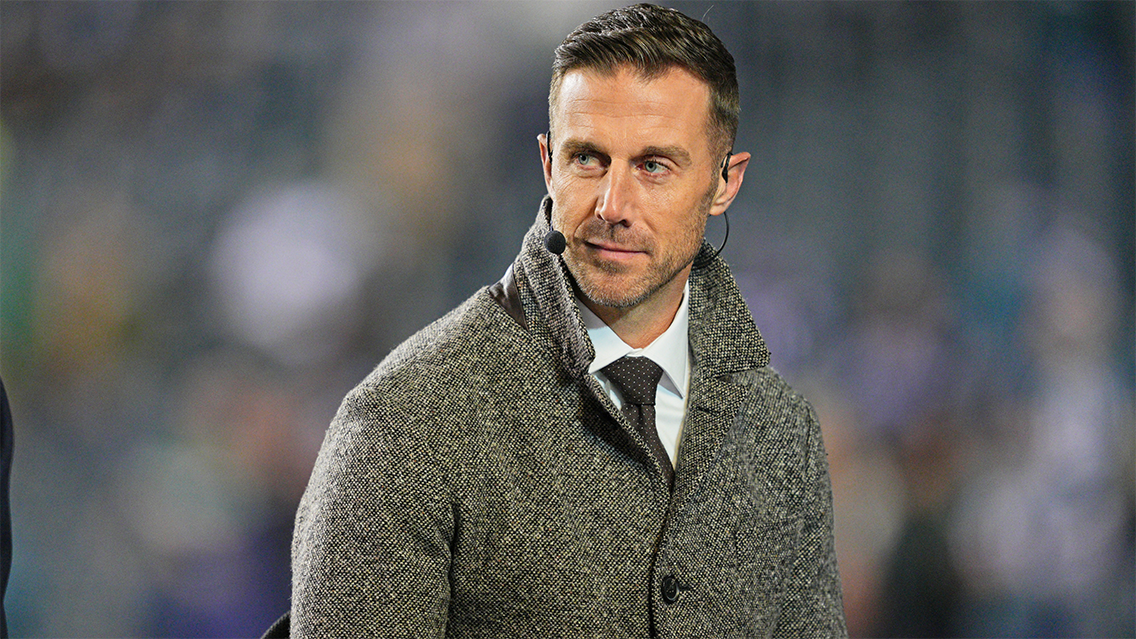
“This is a step backward,” Smith declared in an interview with a national sports network. “Football should represent everyone—fans, players, kids watching at home. The rainbow isn’t about politics; it’s about showing people they belong. Taking it away sends the wrong message.”
Smith’s words struck a chord across the sports world, highlighting the symbolic weight of the rainbow imagery that had been embraced by many players as part of the “Football Is for Everyone” initiative launched several years ago.
A Partnership Ends
The NFL’s collaboration with Stonewall was launched in 2018, representing what many at the time saw as a major shift for the league. Stonewall, founded in the UK but widely recognized internationally, is known for advocating LGBTQ+ equality across sports, workplaces, and schools.
Through the partnership, NFL players were encouraged to wear rainbow gear during Pride Month, captains sported rainbow armbands in certain games, and the league promoted messages of inclusivity across stadiums and social channels. The visibility was powerful: it told LGBTQ+ fans that professional football could be a safe and welcoming space.
Ending that partnership now feels to many like a reversal. Advocacy groups expressed frustration, arguing that progress that took years to build could unravel in a single decision.
Community and Player Reactions
The backlash has been swift. LGBTQ+ advocacy groups condemned the decision as regressive and harmful, with one organization calling it “a clear retreat from inclusivity at a time when visibility is more important than ever.”
Fans also voiced their discontent. Social media lit up with hashtags such as #StepBackwardNFL, #PlayWithPride, and #InclusionMatters. Many shared personal stories of how seeing NFL players wear rainbow armbands or shoelaces helped them feel seen as fans.
Current players, while more cautious in their public statements, have begun to signal disapproval as well. Several anonymously told reporters that the move “feels like the rug has been pulled out from under us.” Others hinted that some captains may find ways to quietly protest on game days, even under the new restrictions.


