The worlds of wrestling and music collided in unexpected fashion this week when WWE superstar Bianca Belair voiced her support for Grammy-winning rapper Cardi B. The move, bold and unapologetic, has sparked widespread debate across the wrestling community and beyond, not because of anything that happened inside the squared circle, but because of Belair’s willingness to stand by one of music’s most polarizing figures.

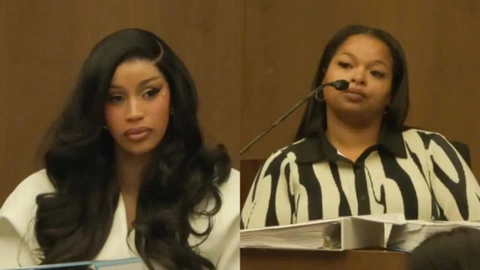
Cardi B has been embroiled in a tumultuous $24 million civil lawsuit that captured headlines worldwide. Though she ultimately secured a favorable but controversial verdict, her reputation remains sharply divided in the public eye. Critics point to her string of controversies as evidence that she should be distanced from mainstream platforms. Admirers, however, argue that her authenticity, talent, and resilience continue to define her career more than any lawsuit ever could. Into this fractured debate stepped Bianca Belair, one of WWE’s brightest stars and a figure celebrated for her charisma, strength, and authenticity.
In a candid statement, Belair expressed her admiration for Cardi B and went further by calling on WWE management to invite the rapper to perform in the ring. “Cardi B is bigger than the scandals,” Belair said. “Her story is about staying true to herself and rising above challenges. Having her perform at WWE would send a powerful message that music and talent can overcome anything.”
The remarks immediately spread across social media, sparking a frenzy of reactions. Supporters hailed Belair for her courage, praising her for standing by Cardi B at a time when many public figures are cautious about aligning with controversial celebrities. To these fans, Belair’s statement was consistent with her persona: bold, unapologetic, and unafraid of criticism. They saw it as another example of her refusing to conform to expectations, both in and out of the wrestling world.
But the backlash was swift and fierce. Many fans labeled Belair as “contrary,” questioning why she would risk her reputation by openly supporting Cardi B. Wrestling traditionalists in particular criticized the idea of bringing the rapper into a WWE ring, arguing that it would dilute the sport’s integrity and distract from its core product. Others insisted that aligning WWE with a figure surrounded by scandal could tarnish the company’s brand, which has worked hard in recent years to present itself as family-friendly entertainment.
The controversy illustrates the evolving role of athletes and entertainers as cultural influencers. Bianca Belair has never been one to shy away from speaking her mind. Known as the “EST of WWE” — the strongest, fastest, and toughest in the women’s division — she has embraced a persona rooted in authenticity and confidence. Her willingness to support Cardi B is consistent with that image, reinforcing her brand as someone who defies expectations and refuses to conform to safe, scripted narratives.
For WWE, the situation presents both opportunity and risk. The company has long embraced crossover moments with mainstream celebrities, from Mike Tyson’s involvement in the Attitude Era to Bad Bunny’s widely praised in-ring appearances. Cardi B herself has expressed interest in WWE in the past, often tweeting about her love for wrestling and engaging with fans online. Yet inviting her to perform in the aftermath of a high-profile lawsuit would spark intense media coverage — some celebratory, some critical. WWE would need to balance the spectacle with the potential backlash.
Fans of Cardi B, particularly those in younger demographics, rallied behind Belair’s comments. Many argued that a WWE appearance would be the perfect stage for Cardi, whose bold personality and unfiltered style align with the drama and theatrics of professional wrestling. They saw Belair’s comments as an invitation to embrace the crossover between music and wrestling, a partnership that could electrify audiences and broaden WWE’s cultural relevance.
On the other hand, some wrestling purists bristled at the idea, fearing that such a move would overshadow in-ring talent and storylines. To them, WWE should prioritize athletic competition and storytelling rather than headline-grabbing stunts. They argued that Belair’s comments risked shifting attention away from wrestling itself toward sensationalism.
Cardi B has not yet publicly responded to Belair’s support, though she has a history of engaging with WWE content online. If she were to accept such an invitation, it would likely become one of the most talked-about celebrity appearances in WWE history. Given her Bronx roots, outspoken personality, and global influence, a WWE stage could be a natural fit for her brand of larger-than-life entertainment.
Sports and entertainment analysts have weighed in on the debate, noting that Belair’s stance reflects a broader cultural shift. Younger stars in both wrestling and music are increasingly embracing authenticity, blurring the lines between controversy and artistry. Belair’s support of Cardi B is not simply about one performance but about affirming a value system that celebrates resilience, individuality, and self-expression. Critics may call it reckless, but admirers see it as a reflection of the world today, where audiences expect their heroes to be multidimensional.
For Bianca Belair personally, the controversy is unlikely to shake her confidence. She has built her career on defying expectations, whether by headlining WrestleMania or redefining what it means to be a women’s champion in WWE. Her willingness to stand by Cardi B fits into her larger narrative of being bold and fearless, regardless of public opinion.
As the debate continues, WWE fans remain divided. Some envision a spectacle where Cardi B energizes a stadium with a live performance, adding to WWE’s legacy of unforgettable celebrity moments. Others fear that such a move would further distance the company from its wrestling roots. What is undeniable is that Belair’s comments have forced a conversation not just about one rapper but about the role of authenticity, redemption, and crossover culture in modern entertainment.
In the end, Bianca Belair’s message is simple: talent and music should not be defined by scandal. By backing Cardi B, she has placed herself at the center of a cultural debate that transcends wrestling. Whether fans view her as courageous or contrary, her words have ensured that both she and Cardi B remain firmly in the spotlight, sparking conversations that extend far beyond the ring.


