Legendary coach Dawn Staley has sparked a full-blown denim crisis, calling on her millions of followers to boycott American Eagle after the retailer failed to choose LSU star Angel Reese as the face of its new campaign.
“If low-rise jeans can make a comeback, so can accountability,” Staley allegedly thundered, igniting a fierce national debate over corporate responsibility, cultural representation, and whether America really needs another ad featuring people pretending to look comfortable in distressed denim jackets.
Staley’s Denim Manifesto
In what some are calling “The Gettysburg Address of Fashion,” Staley declared:
“Angel Reese is American women. She is bold, confident, unapologetic — and she doesn’t need jeggings to prove it.”
Social media immediately erupted. One camp praised Staley’s call for representation, while another insisted that the true victims here are the mannequins at American Eagle stores, forced to stand in perpetuity with hands on nonexistent hips.
Congress Weighs In
Within hours, politicians rushed to take sides. A bipartisan group introduced the Fair Representation in Denim Act, requiring all major brands to feature at least one national champion per advertising cycle. Meanwhile, lobbyists for khakis seized the opportunity to quietly rebrand their pants as “the true patriotic legwear.”

The Angel Reese Response
Reached for comment, Angel Reese was reportedly unfazed, telling reporters:
“I don’t need American Eagle. I am the American eagle.”
She then spread her wings (metaphorically, though some eyewitnesses remain unconvinced) and dunked on a nine-foot rim while wearing couture.
The National Fallout
Experts predict that the boycott could sink American Eagle’s sales or, worse, force them to invent a new line of “Empowerment Jeggings” designed in partnership with motivational influencers. Meanwhile, Staley’s supporters have vowed to exclusively shop at stores that embrace true representation — like Costco, which represents all Americans through its $1.50 hot dog combo.
As one analyst put it:
“This isn’t about jeans. This is about America’s soul — and who gets to wear it, preferably in a size medium with a 30-inch inseam.”
Dawn Staley Would Accept Knicks Job, Advocating for Women in Sports
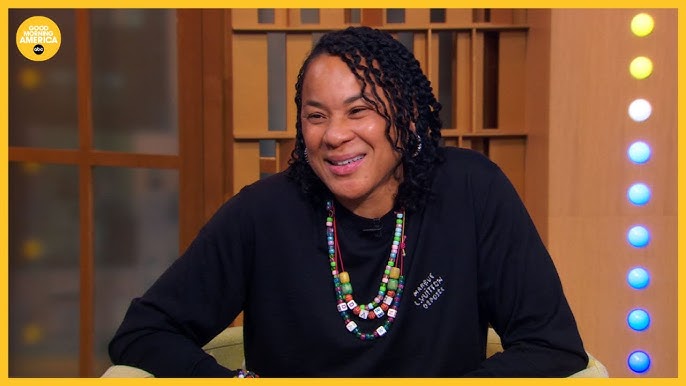
Dawn Staley, head coach of South Carolina’s women’s basketball team, revealed that she would have accepted the New York Knicks coaching position if offered, highlighting a significant step toward breaking gender barriers in sports.
Having led the Gamecocks to three national titles, Staley expressed pride in being a strong candidate and emphasized the importance of representation in leadership roles. While her candidacy generated buzz, Staley’s probing questions during the interview about the Knicks’ readiness for a female head coach may have impacted her chances. Despite her interest, Staley remains committed to South Carolina, where she recently signed a contract extension, further establishing her legacy in women’s basketball.
By the Numbers
Dawn Staley has led South Carolina to three national championships.
She signed a contract extension in January through the 2029-30 season, becoming the highest-paid coach in college women’s basketball history.
State of Play
The Knicks are in search of a new head coach following the firing of Tom Thibodeau, but have been hesitant with their candidate choices.
Staley’s interview refocused attention on the potential for women in NBA coaching roles, particularly at a high-profile franchise like the Knicks.
What’s NextThe NBA landscape may gradually shift as more organizations open up to female leadership, depending on how teams respond to gender diversity in coaching. Staley’s future could hinge on cultural changes within the league and potential opportunities as teams reassess their coaching strategies.
Bottom LineDawn Staley’s candidacy for the Knicks coaching job illustrates the ongoing dialogue about gender inclusivity in sports leadership. Her influence, both historically in women’s basketball and potentially in the NBA, could inspire change if teams are willing to embrace diverse coaching talents.
———————————————————————————————————————————————————
WNBA REF FACE FIRING After HELPING NY Liberty BEAT Caitlin Clark & Indiana Fever On This DIRTY CALL!
“Controversial Call Costs Fever As WNBA Faces Firestorm Over Caitlin Clark Foul – Fans Demand Referee Be Fired”
A crisp spring evening in Indianapolis was supposed to end in triumph for the Indiana Fever. Fans packed the Gainbridge Fieldhouse, many clad in navy and red, voices hoarse from cheering for their new hero — Caitlin Clark. They had watched her orchestrate a stunning comeback, slicing through the New York Liberty’s elite defense with poise and precision. But as the clock ticked toward zero and the stakes mounted, something else took center stage — something no athlete, no coach, and no fan ever wants to see: the game being taken out of the players’ hands.
This wasn’t just another WNBA regular season thriller. This was a statement game — a chance for the young Fever to prove they could hang with the league’s elite, and a stage for Caitlin Clark to show why she had become the most talked-about rookie in years. And for 39 minutes and 57 seconds, she did just that.
But in the final three seconds, everything unraveled. Not because of poor execution. Not because of a missed shot. But because of a single, controversial whistle.

The Call That Changed Everything
With 2.9 seconds remaining, the Fever trailed by two. Clark, already with 23 points and several jaw-dropping highlights, was the clear go-to. Off a well-designed screen set, she curled to the top of the arc, received the ball, and tried to pivot toward the rim for a potential game-winning play.
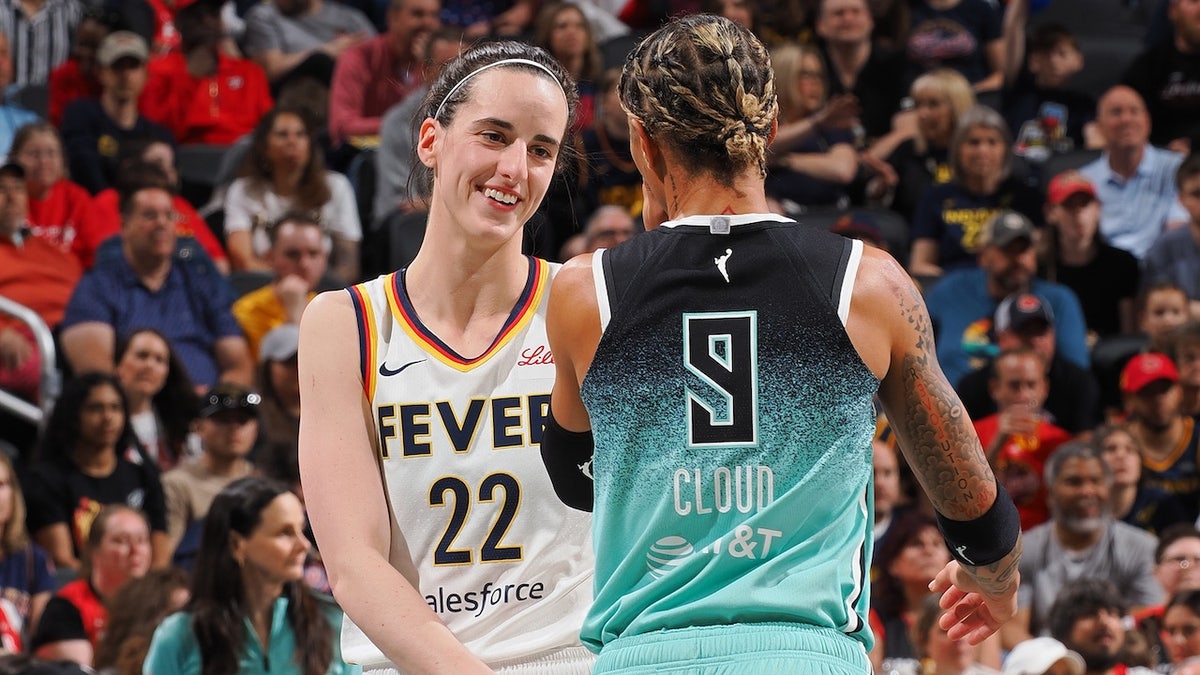
Then came the contact. Natasha Cloud — Liberty veteran and defensive anchor — smothered her, body to body. There was clear physicality. Clark tried to spin free, momentarily lost her balance, and tossed up a desperate shot that missed everything.
No whistle. No review. Game over.
The New York Liberty 78, Indiana Fever 75.
But the real noise didn’t start until afterward.
“A Phantom Foul” or Rigged Reality?
Moments earlier, with just under a minute to go, Clark had seemingly created a three-point play opportunity. She drove past her defender, absorbed contact in the lane, and kissed the ball off the glass for a tough and-1 finish — or so she thought.
Instead, veteran referee Marisa Collins blew her whistle — not for a shooting foul, but for an offensive foul. A stunned gasp echoed through the arena. Replays showed Clark’s off-arm making minor contact — the kind rarely whistled in crunch time, especially when a defender is moving laterally.
The bucket was wiped away. Momentum stolen. And within seconds, social media exploded.
Fans weren’t just upset — they were furious. Within minutes, hashtags like #FireMarisaCollins and #FreeCaitlin began trending on X (formerly Twitter). Analysts quickly circulated past game clips showing Collins calling similarly questionable fouls in Liberty matchups over the past two seasons.
“She’s done it again,” one fan tweeted. “Different game, same ref, same beneficiary.”
Another popular comment read, “Caitlin Clark didn’t lose this game. The refs took it from her.”
WNBA Under Pressure as League Officials Open Inquiry
According to multiple league insiders, the WNBA has already launched a formal review into the officiating during the Fever-Liberty game. League sources confirmed that radio communications between refs are being pulled, alternate angles are under scrutiny, and internal metrics are being applied to measure consistency.
While firings are rare, disciplinary action isn’t off the table. Referees have been suspended or removed from postseason rotation for egregious mistakes in past seasons, but this time feels different — because of the stakes, the player involved, and the intense national spotlight.
Sponsors are watching. Broadcasters are raising questions. Fans — many of whom tuned in because of Clark’s meteoric rise — are now questioning the integrity of the sport they’re just beginning to embrace.
Caitlin Clark’s Reaction: Words Unsure, But Eyes Said Everything
Post-game, Caitlin Clark was composed but clearly simmering. She didn’t lash out or blame anyone publicly, but as reporters pressed for her thoughts on the final possessions, she gave a sidelong glance, then said softly, “We just wanted a fair chance.”
That was all she said. But sometimes, a look says more than words ever could.
Clark has faced physical defense all season. As one of the most-hyped rookies in league history, she knows she’s a target. But she’s also been vocal in the past about wanting to earn every point the hard way. What she doesn’t want — what no competitor wants — is to feel like the officials dictated the outcome.
Coach Stephanie White’s Silent Regret
Fever coach Stephanie White, normally fiery and protective of her players, played it diplomatically in her postgame remarks.
“We’ll let the league handle it,” she said flatly.
But even that wasn’t enough to shield her from criticism. Fans were quick to note that the Fever still had a coach’s challenge remaining — one that White did not use on the Clark offensive foul, or the no-call on the final possession.
“That’s coaching malpractice,” one analyst fumed. “You have a chance to protect your star, possibly tie or win the game — and you sit on your hands?”
A quiet storm may now be brewing around White as well. But no matter how many fingers get pointed, all roads lead back to the referees.
Natasha Cloud: Veteran Defender or Villain of the Night?
Adding to the drama is the role of Natasha Cloud — the very player who made contact with Clark in the closing seconds. Known for her gritty defense and strong opinions, Cloud had spoken before the game about the challenge of containing Clark.
“She’s a great player,” Cloud said. “But we’re not here to roll out the red carpet.”
That statement, innocent on its surface, now feels almost prophetic. Was the non-call on Cloud a matter of ‘letting them play,’ or a refusal to admit a foul that would’ve changed the outcome?
Critics pointed out the irony that Cloud — who prides herself on physical defense — may have gotten away with the kind of contact that, in the NBA, would’ve sent a shooter to the line for three free throws, especially in a game-deciding moment.
A League at a Crossroads
For WNBA Commissioner Cathy Engelbert, this moment is pivotal. In the offseason, she promised increased referee accountability and investments in officiating development. But talk is cheap when the product on the floor feels compromised.
This isn’t just about one missed call. It’s about trust — trust from fans, players, coaches, sponsors, and media. When trust erodes, even the most thrilling basketball can’t save a league.
Former NBA star Dwyane Wade chimed in late Sunday night, tweeting:
“Caitlin Clark deserved better. Period. If you want this league to grow, protect its stars and let the players decide games.”
WNBA legend Lisa Leslie retweeted that with a single word:
“Facts.”
The Fallout: What Comes Next?
As petitions calling for Marisa Collins’s suspension rack up signatures and debate rages across ESPN, social media, and podcasts, the league’s next move will send a powerful message.
If Collins is quietly rotated out or merely reprimanded, critics will howl. If she is removed or suspended, it could set a precedent that referees are no longer untouchable.
And if nothing happens?
Then the WNBA risks squandering the goodwill that Caitlin Clark, A’ja Wilson, Breanna Stewart, and other rising stars have worked so hard to build. New fans brought in by Clark’s college heroics and fearless WNBA play want to believe this league is different. That it’s fair. That it’s worth investing in.
They saw a game decided by a whistle — or the lack of one — and now they’re watching the league just as closely as the players.
Final Thoughts: Let the Players Decide
In the end, sports are supposed to be the ultimate meritocracy. You win or lose based on skill, preparation, and heart. Not politics. Not perception. Not favoritism.
Caitlin Clark and the Indiana Fever didn’t ask for special treatment. They just wanted a fair chance to win.
And for now, that chance was taken from them — not by an opponent, but by a referee.
Whether or not Marisa Collins keeps her job, the real question remains: will the WNBA protect its stars and its integrity — or allow whispers of bias to become a roar that drowns out the sound of progress?
The next game might be just days away. But how this one is remembered will depend on what the league does next.
Caitlin Clark furious with WNBA refs after they failed to whistle a foul by Natasha Cloud for hard contact
Natasha Cloud’s defensive contact goes uncalled in final seconds; Liberty remain undefeated with 90-88 win
Caitlin Clark threw up her arms, yelled at WNBA referees and punched the air in frustration after a controversial no-call cost her team a chance to knock off the defending champions Saturday.
In the final seconds of the Indiana Fever’s 90-88 loss to the reigning champion New York Liberty, Clark took the ball with a chance to tie or win the game.
New York’s Natasha Cloud was defending Clark and leaned into the superstar enough to knock the ball out of Clark’s hands and knock Clark back slightly.