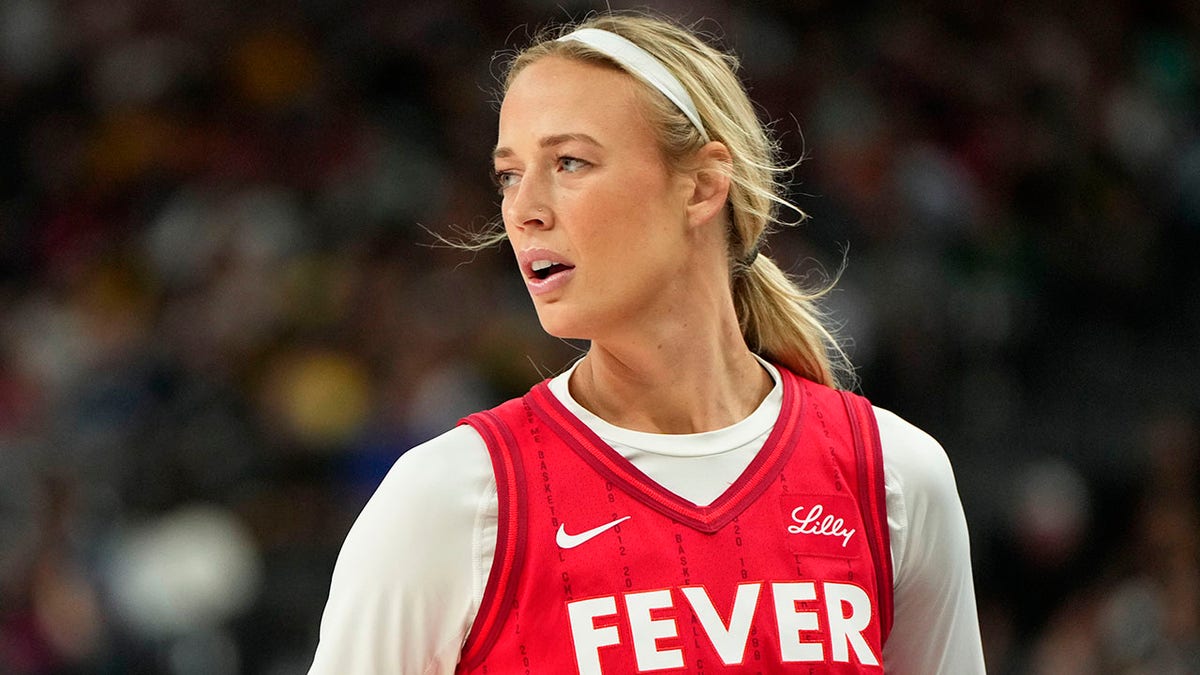
The Indiana Fever’s Sophie Cunningham has never been the type to shy away from a challenge. Whether it’s battling opponents on the hardwood, addressing tough questions from the media, or navigating the stormy currents of social media debates that have engulfed the WNBA during its breakout season, Cunningham has built her reputation on resilience and fire. Fans know her not just as a solid contributor on the court, but as the Fever’s emotional spark plug—the one who isn’t afraid to speak her mind or put her body on the line for a teammate.
That fiery reputation, the same one that has earned her respect among peers and supporters, has now put her on a direct collision course with one of the most polarizing voices in American sports media: Skip Bayless. Known for his confrontational style and headline-grabbing takes, Bayless has made a career out of stirring controversy. This time, his target was Cunningham.
On the latest episode of his show Show Me Something, Bayless dismissed Cunningham as nothing more than a “textbook clout chaser,” suggesting that her recent defense of Caitlin Clark was motivated less by loyalty and more by opportunism. For many athletes, being the subject of such a remark might have gone unanswered, another piece of noise in the endless chatter of the sports world. But Cunningham is not “many athletes.”
Instead of letting the insult linger, she seized the moment and fired back with a candid, biting response that turned Bayless’s critique on its head. With sharp humor and pointed irony, Cunningham flipped the accusation around, calling out the commentator for using her name to drive clicks and generate attention for his own show. In doing so, she didn’t just defend her integrity—she doubled down on her identity as a competitor, a teammate, and a player who refuses to be defined by outsiders.

“Who’s the Real Clout Chaser?”
The spark of the controversy began with a single YouTube thumbnail. On Skip Bayless’s program, Show Me Something, a segment appeared dissecting Sophie Cunningham’s defense of her Indiana Fever teammate Caitlin Clark. Across the screen, in bold letters, were the words: “A Textbook Clout Chaser.”
The video itself didn’t set the internet ablaze. It drew only modest views, barely registering compared to the tidal wave of content surrounding Clark and the WNBA’s surging popularity. Yet the phrasing of Bayless’s critique, the casual way he branded Cunningham with a dismissive label, struck a nerve.
For many athletes, such a jab might have been ignored, buried under the daily churn of media chatter. But Cunningham has never been wired to stay silent when her name is on the line. She wasn’t about to let the insult slide.
“Dude, Skip, who’s the clout chaser? You’re literally using my name as your headline, so people can click on it,” she fired back, her words carrying a mix of disbelief and razor-sharp bite. “And, like, my thing is, I don’t mind the guy. I don’t mind the guy. I have no beef with you. I’ve never met you, I’ve actually really never listened to you.”
Her candor was as striking as her tone. Cunningham made it clear that she had no personal vendetta against Bayless—no history, no prior run-ins, not even a habit of watching his shows. To her, the entire moment felt less like criticism and more like irony at its peak.
In fact, Cunningham admitted that she hadn’t even been aware of the video until someone sent it her way. Only then did she see her name splashed across a clip accusing her of the very thing she believed Bayless himself was guilty of: chasing clicks.
“He’s calling me a clout chaser, dude, you’re the one who has my name plastered all over your YouTube that had 36 views, like get out of here,” she said, her exasperation breaking into humor.
It was a pointed takedown—one that revealed both irritation and amusement. On one hand, she was frustrated by the pettiness of the label. On the other, she couldn’t help but laugh at the irony: a sports commentator leveraging her name for attention while simultaneously accusing her of the same behavior.
In Cunningham’s view, the hypocrisy was glaring. For a player who has spent her career standing up for teammates, her identity was being boiled down to a cheap buzzword by someone who profits off provocation. Rather than letting it define her, she chose to flip the script—and in doing so, she exposed the hollowness of Bayless’s claim.
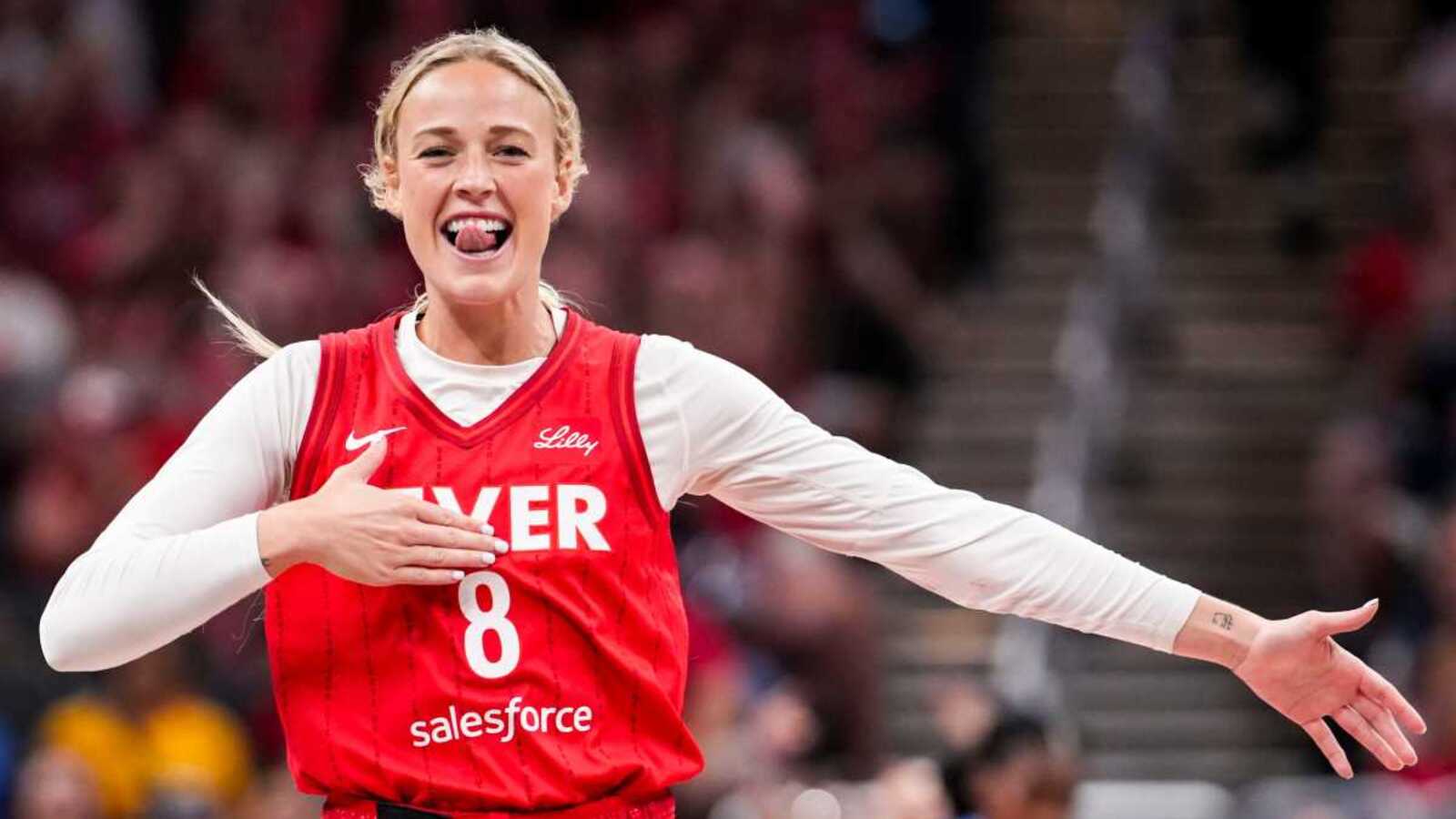
Standing Up for Clark—And Herself
At the heart of Bayless’s criticism was Cunningham’s vocal and physical defense of rookie star Caitlin Clark. To that, Cunningham responded without hesitation.
“I’ve always been this way,” she explained. “In college, I was that way. Don’t mess with me. Don’t mess with my teammates.”
Her words reflect a clear through line in her career: she has always embraced the role of protector. At the University of Missouri, Cunningham was known for her scrappy, relentless style of play. In the WNBA, that same mentality has translated into her role with the Fever.
If Clark is the face of the franchise, Cunningham has become its shield—unafraid of confrontation and willing to take the heat so her teammate doesn’t have to.
The Enforcer Role
Cunningham’s reputation as the Fever’s enforcer didn’t emerge from nowhere. It became cemented during a June 17 game against the Connecticut Sun.
In that matchup, Clark had already taken a poke to the eye from Sun guard Jacy Sheldon, a move that looked intentional and left fans fuming. Minutes later, Cunningham delivered a hard foul on Sheldon that appeared to be payback. The message was unmistakable: touch our star player, and you’ll have to answer to me.
The foul led to Cunningham’s ejection, but it also earned her respect among Fever fans and teammates. It was a defining moment that established her as more than just a role player—she was now the enforcer.
In hockey, the role of the enforcer is well known. Every team traditionally has one: a player whose job is to stand up for teammates, especially the star, and respond to questionable plays by the opposition. The enforcer doesn’t always lead in scoring or steals the spotlight, but they maintain order and protect their team’s identity.
By that definition, Cunningham was doing her job perfectly.