The night was staged like a rebirth. Chicago Sky had not only prepared a game, they had prepared a spectacle. August 19 at Wintrust Arena was announced as the homecoming of their brightest marketing piece. After nearly three weeks away, Angel Reese was back.
Pink banners stretched across the arena. The scoreboard flashed graphics in bold letters: “Welcome Back, Barbie!”. Cameras followed her every move as she walked onto the court, chin high, smiling wide, waving as though the past three weeks had been nothing more than a pause. The crowd responded with warmth—6,724 voices cheering, filling most of the 9,500-seat arena. To the Sky, this was not just game 35 of a lost season. It was framed as salvation.
The atmosphere felt almost ceremonial. Bright spotlights cut the hardwood into glittering panels, and the music swelled with every step she took in warmups. Reese looked every inch the centerpiece Chicago had promised her to be. This was the script: a superstar returns, rescues her team, and silences every doubt. For a few minutes, everyone in the building wanted to believe.
And then came the subtle cracks that no one dared to name.
On the first possession, Reese cut to the basket, reaching for a feed from Dana Evans. The pass was close, just barely above her fingertips. The ball slipped away, rolling into the baseline and out of bounds. It was minor, nothing unusual. But the pause from the PA announcer stretched just a fraction too long, as if waiting for a cheer that never came. Somewhere in the lower bowl, a seat snapped shut with a sound sharper than it should have been.
Moments later, she pushed into the lane for a layup that looked certain—only to rim out. Again, small, forgettable. But each of these little moments began to weigh heavier than they should. A missed glance between teammates. A defender slipping past a screen too easily. The crowd noise softened from pure roar to scattered applause. The script was still intact, but the first page had already smudged.
Yet Reese kept piling on numbers. She found her rhythm, hitting jumpers, cutting for clean finishes, finishing the first half with double digits in points. Every bucket was celebrated by the PA with extra emphasis: “Welcome BACK… Angel Reese!” The broadcasters leaned into the storyline, replaying her baskets and smiling faces.
For a while, the narrative seemed to recover. Fans clapped with conviction again. Commentators spoke of resilience, of maturity after time away. Reese herself looked energized, barking after plays, pointing at teammates, clapping her hands with swagger. Chicago trailed but stayed close.
The illusion lasted almost two full quarters.
Then came the play that would change the entire meaning of the night.
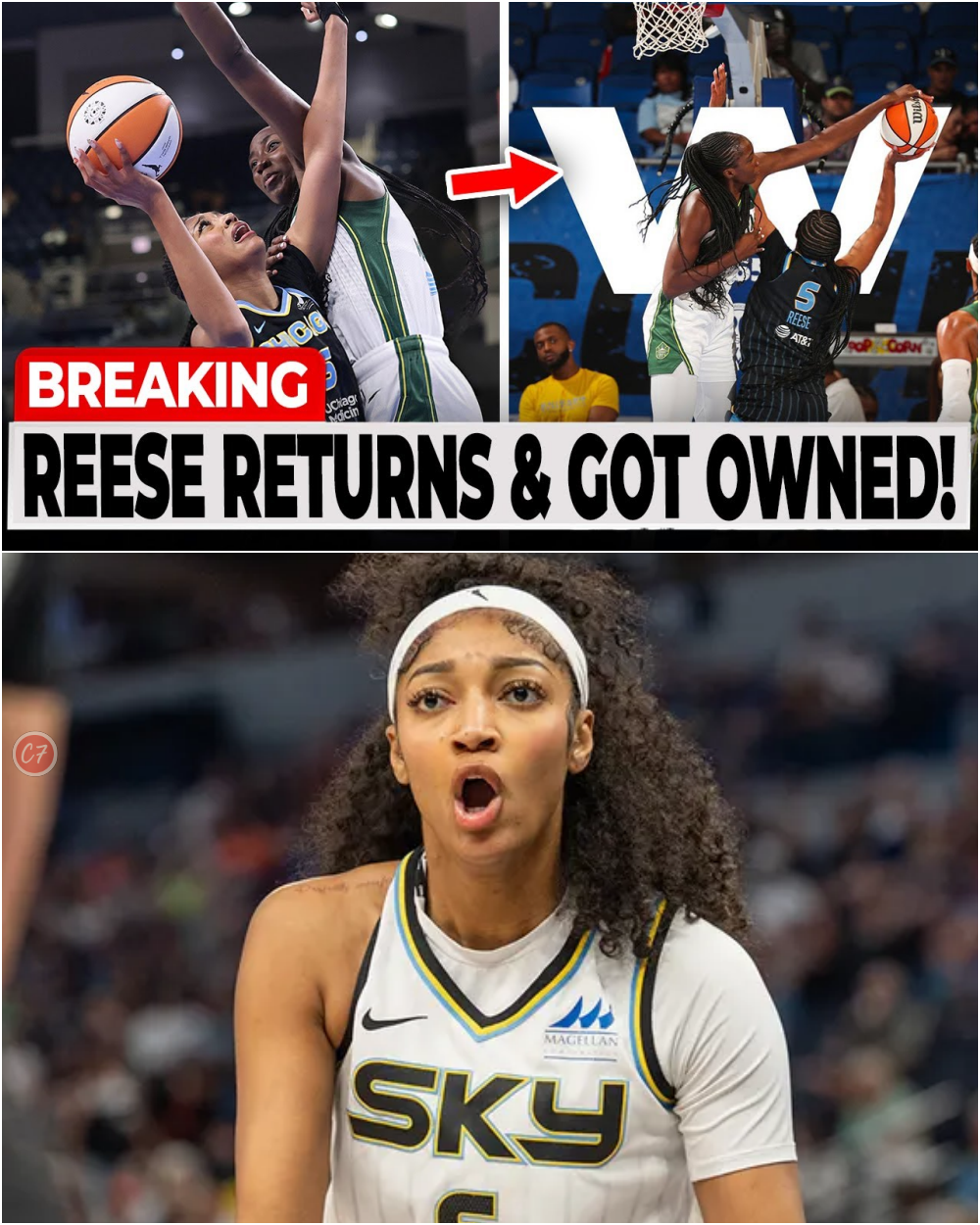
Reese spun baseline, the ball secured in her right hand. Two long strides carried her toward the rim, chin tilted upward as if claiming the lane as her own. At that exact moment, Seattle’s Ezi Magbegor slid across, arms fully extended. One perfect beat of timing.
Smack.
The block was clean, violent in its finality. The ball ricocheted off the paint and out of bounds. For a heartbeat, the arena froze. The sound cut to nothing. Then came the groan—long, low, a blend of surprise and something darker, almost mocking.
The cameras caught it all. One replay. Then another. Reese blinking once, twice, too long. Her lips pressed flat, her body turning slowly back toward the inbound. There was no need for words. The silence said everything.
That moment spread like fire. Seattle’s social media posted the clip bare—no caption, just the block. Within minutes, fans had looped it into GIFs. By halftime, captions appeared: “Welcome Back… to Reality.” By midnight, it was everywhere, remixed, memed, dissected.
Inside the Sky bench, the air was brittle. A teammate twisted a towel until it wrinkled like old paper. An assistant coach slammed a bottle onto the floor, the sound louder than the timeout whistle. By the time the team retreated to the locker room, silence was heavier than words. Tape ripped off ankles with a hiss, someone muttered “tomorrow,” and the door clicked shut without anyone turning the lock.
The numbers said Reese played well: 19 points on 9-of-13 shooting, 7 rebounds, 4 assists. But numbers crumble quickly when perception decides otherwise. Chicago still lost 94–88, their fifth straight defeat, dropping to 8–26. Any dream of playoffs was dead.
And the symbolism was impossible to ignore. Chicago had bet their future on Reese. They traded away Sonia Citron—the No. 3 pick now shining in Washington, versatile, steady, a Rookie of the Year candidate. They brought in Ariel Atkins for immediate results. They sold fans a savior. But all they had left was a meme.
Meanwhile, 48 hours earlier, a different story had unfolded in Connecticut. The Indiana Fever had roared back from a deficit to beat the Sun 99–93 in overtime. Kelsey Mitchell dropped a career-high 38 points. Aaliyah Boston secured yet another double-double, breaking franchise records. And Caitlin Clark? She orchestrated every beat, pulling defenders, threading passes, drilling deep threes that turned the game into theater.
Fans on the road cheered Indiana as if it were their home team. National outlets ran with the headline: “Greatest Comeback in Franchise History.” Clark’s presence made the Fever not just competitive, but magnetic. Whether injured or not, playing heavy minutes or light, she never disappeared. She was always there.
That is what cut deepest in Chicago. Reese had vanished for three weeks, her absence wrapped in silence. She returned to banners, lights, and slogans—only to be remembered for one block. Clark had been present all along, her team building resilience and identity around her.
One side was marketed. The other was built.
And that is why the block carried a sting far sharper than the scoreboard. It was never just two points lost. It was the collapse of an illusion. A crown placed too early, slipping off in front of thousands.
By the next morning, nobody was talking about Reese’s 19 points. Nobody remembered the rebounds. The only thing circulating was that single frame of failure, frozen and replayed until it imprinted on the league’s memory.
Chicago had staged the night with lights, banners, and hope. But just minutes later, all of it froze.
The cruelest irony? The name echoing in that silence wasn’t Angel Reese at all. It was Caitlin Clark.
The night was staged like a rebirth. Chicago Sky had not only prepared a game, they had prepared a spectacle. August 19 at Wintrust Arena was announced as the homecoming of their brightest marketing piece. After nearly three weeks away, Angel Reese was back.
Pink banners stretched across the arena. The scoreboard flashed graphics in bold letters: “Welcome Back, Barbie!”. Cameras followed her every move as she walked onto the court, chin high, smiling wide, waving as though the past three weeks had been nothing more than a pause. The crowd responded with warmth—6,724 voices cheering, filling most of the 9,500-seat arena. To the Sky, this was not just game 35 of a lost season. It was framed as salvation.
The atmosphere felt almost ceremonial. Bright spotlights cut the hardwood into glittering panels, and the music swelled with every step she took in warmups. Reese looked every inch the centerpiece Chicago had promised her to be. This was the script: a superstar returns, rescues her team, and silences every doubt. For a few minutes, everyone in the building wanted to believe.
And then came the subtle cracks that no one dared to name.
On the first possession, Reese cut to the basket, reaching for a feed from Dana Evans. The pass was close, just barely above her fingertips. The ball slipped away, rolling into the baseline and out of bounds. It was minor, nothing unusual. But the pause from the PA announcer stretched just a fraction too long, as if waiting for a cheer that never came. Somewhere in the lower bowl, a seat snapped shut with a sound sharper than it should have been.
Moments later, she pushed into the lane for a layup that looked certain—only to rim out. Again, small, forgettable. But each of these little moments began to weigh heavier than they should. A missed glance between teammates. A defender slipping past a screen too easily. The crowd noise softened from pure roar to scattered applause. The script was still intact, but the first page had already smudged.
Yet Reese kept piling on numbers. She found her rhythm, hitting jumpers, cutting for clean finishes, finishing the first half with double digits in points. Every bucket was celebrated by the PA with extra emphasis: “Welcome BACK… Angel Reese!” The broadcasters leaned into the storyline, replaying her baskets and smiling faces.
For a while, the narrative seemed to recover. Fans clapped with conviction again. Commentators spoke of resilience, of maturity after time away. Reese herself looked energized, barking after plays, pointing at teammates, clapping her hands with swagger. Chicago trailed but stayed close.
The illusion lasted almost two full quarters.
Then came the play that would change the entire meaning of the night.
Reese spun baseline, the ball secured in her right hand. Two long strides carried her toward the rim, chin tilted upward as if claiming the lane as her own. At that exact moment, Seattle’s Ezi Magbegor slid across, arms fully extended. One perfect beat of timing.
Smack.
The block was clean, violent in its finality. The ball ricocheted off the paint and out of bounds. For a heartbeat, the arena froze. The sound cut to nothing. Then came the groan—long, low, a blend of surprise and something darker, almost mocking.
The cameras caught it all. One replay. Then another. Reese blinking once, twice, too long. Her lips pressed flat, her body turning slowly back toward the inbound. There was no need for words. The silence said everything.
That moment spread like fire. Seattle’s social media posted the clip bare—no caption, just the block. Within minutes, fans had looped it into GIFs. By halftime, captions appeared: “Welcome Back… to Reality.” By midnight, it was everywhere, remixed, memed, dissected.
Inside the Sky bench, the air was brittle. A teammate twisted a towel until it wrinkled like old paper. An assistant coach slammed a bottle onto the floor, the sound louder than the timeout whistle. By the time the team retreated to the locker room, silence was heavier than words. Tape ripped off ankles with a hiss, someone muttered “tomorrow,” and the door clicked shut without anyone turning the lock.
The numbers said Reese played well: 19 points on 9-of-13 shooting, 7 rebounds, 4 assists. But numbers crumble quickly when perception decides otherwise. Chicago still lost 94–88, their fifth straight defeat, dropping to 8–26. Any dream of playoffs was dead.
And the symbolism was impossible to ignore. Chicago had bet their future on Reese. They traded away Sonia Citron—the No. 3 pick now shining in Washington, versatile, steady, a Rookie of the Year candidate. They brought in Ariel Atkins for immediate results. They sold fans a savior. But all they had left was a meme.
Meanwhile, 48 hours earlier, a different story had unfolded in Connecticut. The Indiana Fever had roared back from a deficit to beat the Sun 99–93 in overtime. Kelsey Mitchell dropped a career-high 38 points. Aaliyah Boston secured yet another double-double, breaking franchise records. And Caitlin Clark? She orchestrated every beat, pulling defenders, threading passes, drilling deep threes that turned the game into theater.
Fans on the road cheered Indiana as if it were their home team. National outlets ran with the headline: “Greatest Comeback in Franchise History.” Clark’s presence made the Fever not just competitive, but magnetic. Whether injured or not, playing heavy minutes or light, she never disappeared. She was always there.
That is what cut deepest in Chicago. Reese had vanished for three weeks, her absence wrapped in silence. She returned to banners, lights, and slogans—only to be remembered for one block. Clark had been present all along, her team building resilience and identity around her.
One side was marketed. The other was built.
And that is why the block carried a sting far sharper than the scoreboard. It was never just two points lost. It was the collapse of an illusion. A crown placed too early, slipping off in front of thousands.
By the next morning, nobody was talking about Reese’s 19 points. Nobody remembered the rebounds. The only thing circulating was that single frame of failure, frozen and replayed until it imprinted on the league’s memory.
Chicago had staged the night with lights, banners, and hope. But just minutes later, all of it froze.
The cruelest irony? The name echoing in that silence wasn’t Angel Reese at all. It was Caitlin Clark.
Information in this article is compiled from publicly available broadcasts, social media posts, and league coverage at the time of writing. Interpretations reflect the atmosphere and reactions surrounding the game and may not represent the official position of the league or the teams involved.


